Products & Formulation
Do You Actually Need 30% Kava Powder?
12 min read
Read
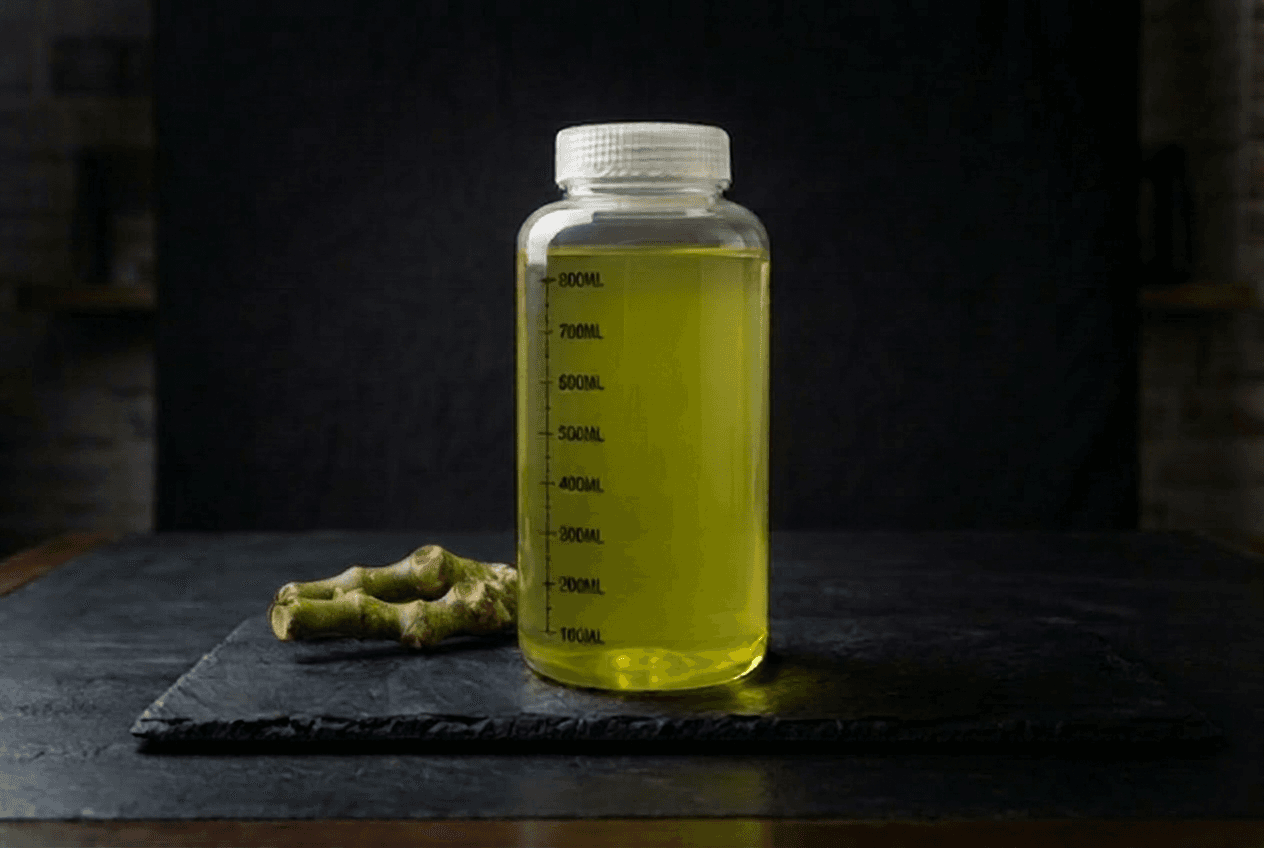
Same nano-emulsion chemistry, two delivery formats — a formulator's guide to when each wins
Nano kava powder and nano kava liquid are siblings, not competitors. Both start from the same Vanuatu kava oleoresin, both use the same sunflower-lecithin nano-emulsion chemistry, and both are engineered for high-bioavailability delivery of kavalactones into finished products. The difference is which side of the batch tank they belong on — dry-side or wet-side — and that answer usually flips based on one variable: whether your formulation is already handling liquid ingredients or not.
This guide walks through when each format is the right call, with the dosing maths, handling considerations, and application trade-offs formulators use to decide.
Both nano formats start with the same input: Kavain's Vanuatu kava oleoresin, produced via supercritical CO2 extraction from HPLC-verified noble kava cultivars. From there, the oleoresin is nano-emulsified at a cGMP-compliant US manufacturing partner — sunflower-derived phosphatides emulsify the kavalactones into nanoscale lipid droplets, fractionated coconut oil (MCT) provides the lipid carrier, and Vitamin C and Vitamin E stabilise the emulsion for shelf life. Everything upstream of the final drying/stabilisation step is identical.
The formats diverge in the last step:
The simplest way to compare formats side by side is to convert them to a common target dose. Below is what it takes to deliver 100 mg of kavalactones through each format:
| Format | Kavalactone loading | Amount of material for 100 mg kavalactones |
|---|---|---|
| Nano Kava Powder | Up to 20% w/w | ~500 mg (0.5 g) |
| Nano Kava Liquid | 2% w/v | ~5,000 mg (5 g, i.e. ~5 mL) |
Ten times the mass through the batch — but for a wet-side formulation, that 5 mL of liquid is often less work than dispersing 0.5 g of powder into a solvent-carrying phase. Which format wins depends less on the concentration ratio and more on where the formulation lives.
Nano powder is the right call when your finished product is dry, low-moisture, or dose-controlled at capsule scale:
Capsules and tablets. A size 0 capsule holds around 500 mg of powder — exactly enough to deliver 100 mg of kavalactones from nano powder. Nano liquid doesn't fit the geometry of a hard capsule at meaningful dose levels; softgels can carry liquid but at higher production cost.
Stick-packs, sachets, and effervescent tablets. Anywhere the consumer adds water at point of use, nano powder is the delivery format the format itself is built around. The water-solubility of the emulsion carries through — the consumer stirs and drinks, no reconstitution required.
Dry blends and premix formulations. Meal-replacement powders, protein blends, dry drink mixes. Nano powder integrates into a dry-side blend with the same handling equipment already in place.
Longer shelf life without cold chain. Nano powder ships and stores at ambient temperature with a 12-month shelf life. Nano liquid needs refrigerated storage and cold-chain logistics — a real cost driver at scale.
Higher potency per kg of material. At 20% kavalactone loading, nano powder is 10× more potent per gram than the 2% nano liquid. For low-inclusion applications where you're minimising inventory volume, powder wins on freight-and-storage economics.
Nano liquid is the right call when your finished product is a liquid, semi-liquid, or high-moisture format — anywhere the formulation is already handling aqueous ingredients:
RTD functional beverages. Meters directly into the batch tank. No pre-dispersion step, no batch-to-batch mixing variability, no risk of powder clumping in high-shear mixing. Consistent kavalactone loading pour after pour.
Kava shots and concentrate formats. Pre-emulsified means clean integration with solubilisers and no gritty sediment in the finished bottle. Especially valuable for clear-bottle applications where visible particles would be a defect.
Tinctures, oral sprays, and sublingual formats. Water-soluble aqueous base integrates cleanly with glycerin, ethanol, and other tincture carriers. High-bioavailability delivery for oromucosal absorption.
Not moist edibles. It is tempting to reach for a liquid wherever a powder would add texture, but gummies, syrups and other high-moisture confections are generally formulated from a TPGS and oleoresin blend rather than a pre-emulsified liquid. For that application use kava oleoresin; nano powder remains workable in low-moisture edibles such as chocolates and chews.
Fast-cycle formulation development. When you're iterating on a beverage or tincture formulation and time-per-trial matters, skipping the powder-dispersion step saves real minutes each cycle. Formulators building RTD kava products often start with nano liquid for prototyping and stay with it into production.
| Consideration | Nano Kava Powder 20% | Nano Kava Liquid 2% |
|---|---|---|
| Storage | Ambient, cool and dry | Refrigerated (cold chain) |
| Shelf life | 12 months | Per-batch confirmation on CoA |
| Handling equipment | Dry-side blending, weighing | Liquid metering, pumping |
| Dispersion step | Adds water at point of use (or in batch) | None — pre-dispersed |
| MOQ | 1 kg | 1 kg |
| Pricing | Live quote against SKU | Currently price on application |
If you're deciding between the two nano formats, ask a single first question about your finished product:
Does the batch tank already contain water or another aqueous phase?
Then check three secondary criteria that can flip the answer:
| Finished product | Nano format |
|---|---|
| Kava-only supplement capsule | Nano Powder |
| Effervescent tablet or stick-pack sachet | Nano Powder |
| Ready-to-drink functional beverage in an aluminium can | Nano Liquid |
| Kava shot in a clear glass bottle | Nano Liquid |
| Tincture or oral spray with glycerin or ethanol base | Nano Liquid |
| Gummy or high-moisture edible | Nano Liquid |
| Chocolate, chews, low-moisture edible | Nano Powder |
| Meal-replacement or protein powder with a kava dose | Nano Powder |
Nano formats deliver kavalactones at 2% (liquid) and 20% (powder). Kavain's kava oleoresin paste delivers them at 70%, 75%, or 80% — an order of magnitude more concentrated. Oleoresin is the right call when you need the smallest possible inclusion rate and can handle a paste in the batch (softgels, high-potency kava shots, pharmaceutical-adjacent formulations). If concentration matters more than water-solubility or bioavailability, oleoresin outperforms both nano formats on a mg-kavalactone-per-mL-of-batch basis.
If you're evaluating oleoresin against dry-side kava formats, our Kava Powder, Oleoresin, or Nano guide walks through the trade-off in more depth.
Nano kava powder and nano kava liquid aren't rival products — they're two delivery formats built from the same nano-emulsion toolkit, sitting on opposite sides of your batch tank. Which one belongs in your formulation comes down to whether that tank already has water in it and whether your consumer adds any at point of use.
If you'd like samples of both formats to evaluate side by side, contact our team — we can arrange sample kits sized for lab-scale formulation trials. If you're already scoping a specific formulation, our quote builder covers both SKUs and either format can flow into the same white-label programme if you're building a private-label kava product.
Continue exploring kava industry insights

Experience the Kavain difference. Request a sample today and discover why leading formulators trust us for their kava supply.