
Microencapsulated kava liquid built from our Vanuatu oleoresin — 2% and 5% kavalactones in a ready-to-dose concentrate. No reconstitution, no dispersion step, engineered for direct use in RTD beverages, kava shots and tinctures.
Micro kava liquid — also called microencapsulated kava liquid — is a ready-to-dose kava concentrate for water-based formulations: RTD beverages, kava shots, tinctures and liquid supplements. Kavain supplies it at 2% and 5% kavalactones, built from noble Vanuatu kava oleoresin produced by supercritical CO₂ extraction to 70–80% kavalactones before the delivery system is applied. Microencapsulation holds the kavalactones in droplets between 100 and 1,000 nm — overlapping the nano-emulsion range at the fine end and extending up to about a micron — which produces a stable cloudy dispersion rather than a translucent one, and absorbs more gradually, giving a slower onset and a longer duration than nano kava liquid. It meters directly into a batch with no reconstitution and no dispersion step, and every batch is issued with an internal Certificate of Analysis. Minimum order 5 L for the 2% grade and 20 L for the 5% grade.
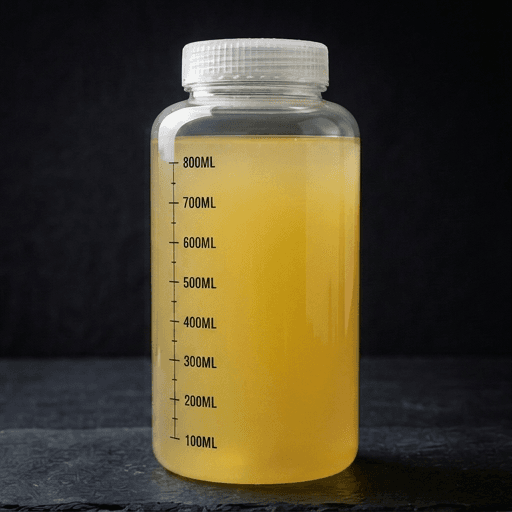 2% & 5% KavalactonesVanuatu
SKU: KAV-MIC-LIQ-2 · KAV-MIC-LIQ-5 · Microencapsulated liquid
Microencapsulated kava liquid produced from Kavain's Vanuatu oleoresin. Meters directly into water-based formulations as a stable dispersion — supplied at two kavalactone loadings so the addition volume can be matched to what your format allows.
Both grades are the same material at different kavalactone loadings, and both work across the same beverage applications — RTD cans and bottles, kava shots, larger-format drinks. Moving between them is an inclusion-rate change, not a reformulation. The 5% simply reaches the same dose in a smaller addition, which also lets it serve formats the 2% cannot: tinctures and concentrates, where a 1 g dropper dose has to carry the whole kavalactone load.
| Attribute | Micro Kava Liquid 2% | Micro Kava Liquid 5% |
|---|---|---|
| Kavalactones | 2% | 5% |
| Kavalactones per gram | 20 mg | 50 mg |
| Material per 100 mg dose | 5.0 g | 2.0 g — 60% less liquid |
| Best for | RTD beverages, kava shots, larger-format drinks | RTD beverages, kava shots, tinctures, concentrates |
| Minimum order | 5 L (bulk discounts from 5 L+) | 20 L (bulk discounts from 20 L+) |
| Lead time |
Both formats begin at the same place — noble Vanuatu root, supercritically CO₂-extracted to a 70–80% oleoresin — and both arrive as ready-to-dose liquids that meter straight into a water-based batch. What separates them is droplet size, and what follows from it: how the dispersion looks, how much work it takes to keep stable, how quickly the effect arrives and how long it lasts, and what the material costs. Neither is the better product outright — they trade against each other.
Our nano liquid holds the kavalactones in droplets around 100 nm. Micro liquid encapsulates across a wider band, roughly 100 to 1,000 nm — overlapping the nano range at its finest and reaching about a micron at its coarsest — which produces a stable cloudy dispersion rather than a translucent one. For most beverage formats that is a non-issue: a juice base, a dairy alternative, a hazy or coloured drink is already opaque, and the dispersion simply disappears into it. It only becomes a deciding factor where the finished product needs to be visibly clear in the glass — and that is the case nano liquid exists for.
The more consequential difference is the effect curve. Larger droplets are absorbed more gradually, so micro liquid has a slower onset than nano — and, because onset and offset move together, a correspondingly longer-lasting profile. Nano is the right choice when a product is built around a fast, sharp arrival. Micro suits a longer, more even experience: session drinks, kava-bar formats, and anything a customer sips rather than shoots.
Set against that, nano is the more forgiving ingredient to work with. It forms a true emulsion that will not separate, sediment or leave an oil ring at the top of a can. Micro holds a stable dispersion — but that stability depends on the formulation and process being right, so it asks more of your team and production line. If beverage-formulation capacity is limited, or the product will sit on a shelf a long time through variable temperatures, nano removes a variable that micro asks you to manage.
| Attribute | Micro liquid | Nano liquid |
|---|
Built for wet-side formulation — anywhere the finished product is already a liquid and a dispersion step would cost you time on the line.
Meters directly into water-based formulations with no dispersion step, and holds as a stable cloudy dispersion rather than settling out the way an unformulated extract does. In the many RTD formats that are already opaque — juice bases, dairy alternatives, coloured and hazy styles — that reads as no change to the drink at all.
Pre-formulated and dose-controlled — pour, blend, fill. Either grade works: a 60 mL shot has ample headroom for the 2%, while the 5% reaches the same load in under half the addition volume.
| Parameter | Value |
|---|---|
| Total kavalactones (mass) | 2% or 5% w/wTwo grades. The batch assay on the Certificate of Analysis is the figure to formulate against, not the label spec |
| Purity before delivery system | 70–80% kavalactonesSupercritical CO₂ oleoresin, before the encapsulation matrix and carrier are applied |
| Droplet size | 100 – 1,000 nmOverlaps our nano-emulsified formats (~100 nm) at the fine end and extends to about a micron — the coarser fraction is why it produces a cloudy dispersion rather than a translucent one |
| Appearance (as supplied) | Cloudy, yellowish liquid |
| Dispersion behaviour | Stable dispersion in water-based formulationsNo reconstitution or separate dispersion step. Stability depends on the formulation and process being correct — unlike a true nano-emulsion, it is not separation-proof by construction. Validate on your own bench |
Piper methysticum extract
2% or 5% w/w
Active — kava extract from our Vanuatu oleoresin
Purified water
Proprietary
Aqueous carrier
Encapsulation matrix
Proprietary
Holds kavalactones in micron-scale droplets for stable dispersion
Lipid carrier
Proprietary
Solubilises the kavalactones prior to encapsulation
Antioxidant stabilisers
Proprietary
Shelf-life protection for the encapsulated kavalactone load
Micro kava liquid is produced exclusively from noble kava cultivars sourced from Vanuatu, using lateral/basal roots and peeled rootstock only. Chemotype is a screening indicator rather than proof of nobility — a profile outside the common patterns warrants investigation, not automatic rejection. Nobility is confirmed by cultivar identity together with flavokavain analysis — the acetone test and the ratios between flavokavains and the individual kavalactones.
Root is cleaned, peeled and dried at origin in the Pacific, then supercritically CO₂-extracted — a solvent-free method that leaves no residual solvent in the finished oleoresin. Microencapsulation is performed at a cGMP-compliant manufacturing partner in the United States. We hold US inventory of both grades, so orders delivered within the United States ship from local stock.
Every batch is issued with an internal Certificate of Analysis covering kavalactone content, heavy metals, pesticide residues and microbial screening. Independent third-party CoAs are arranged on request via our ISO/IEC 17025-accredited US lab partners.
Cultivar identity confirmed alongside HPLC chemotype and flavokavain analysis on every lot.
Micro kava liquid is a microencapsulated, water-dispersible kava concentrate built from our Vanuatu kava oleoresin. The oleoresin is encapsulated into droplets spanning roughly 100 to 1,000 nm — overlapping our nano formats at the fine end and reaching about a micron at the coarse end — which produces a stable, cloudy dispersion rather than a translucent emulsion, a distinction that makes no practical difference in the many beverage formats that are already opaque. It is supplied ready to dose at 2% and 5% kavalactones, meters directly into water-based formulations with no reconstitution or dispersion step, and suits RTD beverages, shots and tinctures.
Droplet size, and the trade-offs that follow from it — neither is the better product outright. Both start from the same noble Vanuatu oleoresin and both arrive as ready-to-dose liquids, but the nano emulsion sits at roughly 100 nm while the micro encapsulation spans roughly 100 to 1,000 nm — overlapping nano at its finest and reaching about a micron at its coarsest. Appearance: nano stays translucent, micro produces a cloudy dispersion — immaterial in the many beverage formats that are already opaque, and only a deciding factor where the drink must stay visibly clear. Effect curve: larger droplets absorb more gradually, so micro has a slower onset and a longer duration, suiting session and sipping formats, where nano suits a fast, sharp arrival. Cost and range: at the same loading micro is priced below nano, and micro comes in 2% and 5% where nano is currently available in 2%. Stability: nano forms a true emulsion that will not separate or oil-float, while micro holds a stable dispersion provided the formulation and process are right — so nano is the more forgiving ingredient if beverage-formulation capacity is limited.

Experience the Kavain difference. Request a sample today and discover why leading formulators trust us for their kava supply.
| 1–3 weeks |
| 1–3 weeks |
| Price (per L) | On application | On application |
Figures above use the label specification. Formulate against the measured assay on the batch Certificate of Analysis — see our kavalactone dosing guide for the conversion.
| Source material | Peeled noble lateral and basal root | Peeled noble lateral and basal root |
| Extraction | CO₂ to 70–80% oleoresin | CO₂ to 70–80% oleoresin |
| Delivery system | Microencapsulation | Nano-emulsion |
| Droplet size | 100 – 1,000 nm | ~100 nm |
| Kavalactone loadings | 2% and 5% | 2% |
| Appearance | Cloudy dispersion | Translucent |
| Beverage stability | Stable dispersion when correctly formulated | True emulsion — no separation or oil float |
| Formulation effort | Needs process control | More forgiving |
| Onset | Slower | Faster |
| Duration | Longer | Shorter |
| Bioavailability | High | Highest |
| Minimum order | 5 L (2%) · 20 L (5%) | 5 L |
| Relative price | Lower at the same loading | Higher |
A longer, more even effect curve, a lower cost per serve, and a 5% grade for tight addition volumes — where you have the formulation capacity to dial the dispersion in.
The fastest onset, a product that must stay visibly clear, or a true emulsion that holds without process tuning.
The one application where grade choice is forced: a dropper dose is around a gram, carrying 50 mg of kavalactones at 5% against 20 mg at 2%. Specify the 5%. The water-dispersible base integrates with glycerin, ethanol and aqueous carriers.
| Onset and duration | Slower onset than nano, longer durationLarger droplets absorb more gradually, so the effect arrives less sharply and tails off over a longer window — suited to session and sipping formats |
| Typical serving size | 50 – 120 mg kavalactonesFormulator guidance range; establish your own target on the bench, since delivered effect depends on format and serving architecture |
| Density | Available on requestRequired for volumetric inclusion-rate calculations — request the current batch figure with your sample |
| pH (as supplied) and pH compatibility | Available on request |
Store in a cool, dry environment below 25°C (77°F), away from direct sunlight. Full technical documentation and a batch Certificate of Analysis are issued with every order and available on request beforehand.
Supercritical CO₂ reverts to gas at ambient pressure, leaving no residue.
Full panel — kavalactones, heavy metals, pesticides, microbial.
For most applications either works, and the choice is about addition volume rather than suitability. Both grades cover the same beverage formats — RTD cans and bottles, kava shots, larger-format drinks — because all of those have room for the addition. The 5% carries 50 mg of kavalactones per gram against the 2% grade's 20 mg, so it reaches the same delivered dose with roughly 60% less added liquid, which also reduces what you ship and store per delivered milligram. The one place the choice is forced is low-volume formats: tinctures, dropper products and concentrates, where a single 1 g dose has to carry the full kavalactone load. There the 5% is the only workable grade. Both are the same material at different loadings, so moving between them is an inclusion-rate change rather than a reformulation.
© 2026 Kavain. All rights reserved.