
Key terms and definitions
Kava Glossary
An authoritative reference for kava terminology — from kavalactones and chemotypes to processing methods and quality standards.
Kavain's kava glossary covers 18 essential terms across chemistry, classification, processing, quality assurance, products, and Pacific Island kava culture. Each definition reflects Kavain's expertise as a vertically integrated kava supplier sourcing across Fiji and Vanuatu, with commercial and operations offices in Hong Kong, the United States, and Australia.
Chemistry
- Kavalactones
- The six primary psychoactive compounds found in kava root (Piper methysticum). The six kavalactones — kavain, dihydrokavain, methysticin, dihydromethysticin, yangonin, and desmethoxyyangonin — are responsible for kava's anxiolytic, muscle-relaxant, and mood-enhancing effects.
- Chemotype
- A numerical sequence representing the order of kavalactone dominance in a specific kava cultivar. For example, a 4-2-6 chemotype means kavain (4) is dominant, followed by dihydrokavain (2) and methysticin (6). Chemotypes determine the cultivar's effects and potency.
Classification
- Noble Kava
- Cultivated kava varieties with centuries of safe traditional use and balanced kavalactone profiles. Noble varieties are recommended by the Codex Alimentarius for human consumption and are the only varieties Kavain sources and supplies.
- Tudei Kava
- Non-noble kava varieties containing higher levels of flavokavains, linked to nausea and prolonged effects lasting two days (hence 'tudei'). Banned for export by Vanuatu's Kava Act. Not sourced or sold by Kavain.
Botany
- Piper methysticum
- The botanical name for the kava plant, a member of the pepper family (Piperaceae). Native to the western Pacific Islands, kava has been cultivated for over 3,000 years for its psychoactive root compounds.
Products
- Oleoresin
- A concentrated kava extract in paste form containing 70–80% kavalactone content. Kavain produces oleoresin extracts via supercritical CO₂ extraction, preserving the full spectrum of kavalactones without using solvents.
- Instant Kava Powder
- A rapid-dispersing kava powder produced from freshly harvested green kava using centrifuge processing and freeze drying technology. Instant kava disperses quickly into water without traditional straining, forming a low-sediment, traditional-style suspension rather than a clear solution — convenient for modern beverage applications.
- Traditional Grind
- Whole root kava powder with fine particle size, designed for authentic traditional preparation using water and straining. Traditional grind typically contains 6–8% kavalactones and is popular in kava bars and ceremonial use.
Plant Anatomy
- Waka
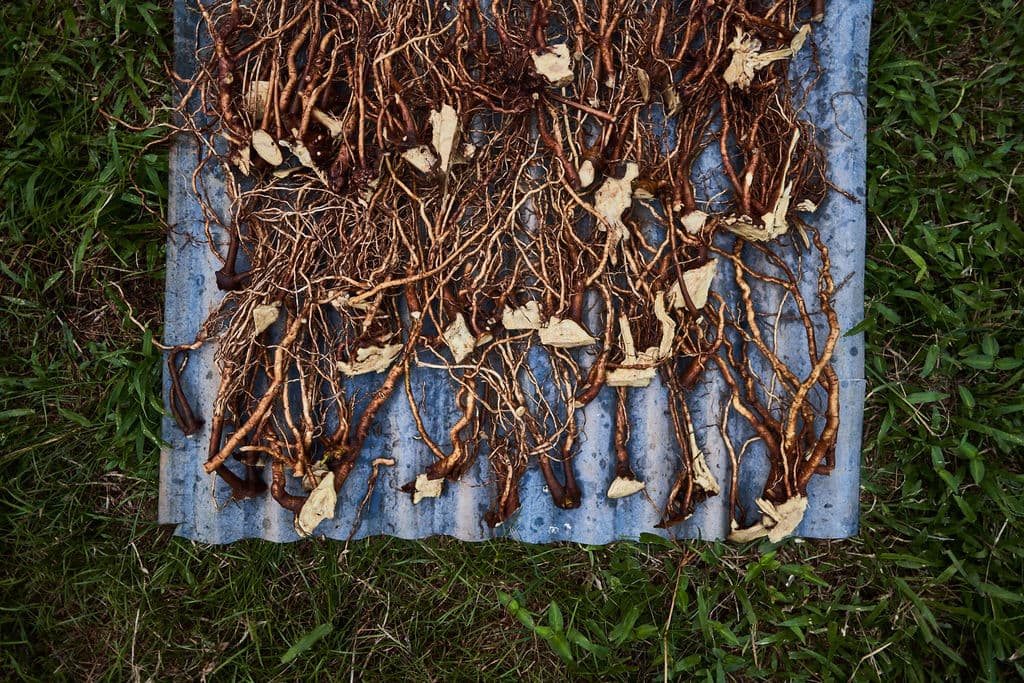
- The premium lateral roots of the kava plant, prized for their higher kavalactone concentration and stronger effects. Waka is the most sought-after root grade in traditional Fijian kava preparation.
- Lewena
- The stump and basal roots of the kava plant, offering a milder kavalactone profile compared to waka. Lewena is commonly used for daily drinking kava in Fiji.
Processing
- Supercritical CO₂ Extraction
- An advanced extraction method using carbon dioxide at high pressure and temperature to isolate kavalactones from kava root. This solvent-free process produces pure, full-spectrum kava oleoresin. Kavain operates its own supercritical CO₂ extraction facility for oleoresin production.
Quality
- Certificate of Analysis (CoA)
- A laboratory document — available on request for any Kavain batch — that details kavalactone content (via HPLC profiling), heavy metal levels, microbial test results, and pesticide residue analysis. CoAs ensure full traceability and quality verification.
- HPLC Kavalactone Profiling
- High-Performance Liquid Chromatography analysis used to identify and quantify the six individual kavalactones in a kava sample. HPLC profiling determines the chemotype, total kavalactone percentage, and batch consistency.
- ISO 22000:2018
- An international standard for food safety management systems, covering every stage of the food chain from primary production to final consumption. Kavain's harvesting and dehydration facilities hold ISO 22000:2018 certification.
- ISO 9001:2015
- The international standard for quality management systems (QMS), ensuring consistent quality in production, processing, and service delivery. Kavain's facilities are ISO 9001:2015 certified.
- HACCP
- Hazard Analysis and Critical Control Points — a systematic approach to food safety that identifies, evaluates, and controls hazards throughout production. Kavain's facilities maintain HACCP certification.
Culture
- Tanoa
- A traditional Fijian carved wooden bowl used for preparing and serving kava during ceremonies and social gatherings. The tanoa is central to Pacific Island kava culture and community bonding rituals.
- Yaqona
- The Fijian word for kava. Yaqona ceremonies are an integral part of Fijian culture, used for welcoming visitors, resolving disputes, and marking important occasions.
- Nakamal
- A traditional kava bar or gathering place in Vanuatu where people drink kava socially. Nakamals are central to ni-Vanuatu cultural life and community connection.
Ready to Source Wholesale Kava
from Kavain?
Experience the Kavain difference. Request a sample today and discover why leading formulators trust us for their kava supply.