Printable version: A standalone Kava Supplier Vetting Checklist covers every requirement in this article in a scannable, print-ready format — 48 checkpoints across seven categories. Use it as an RFP template with every supplier on your shortlist.
Wholesale kava supply is a market with wide dispersion in quality, documentation rigour, and regulatory awareness. A supplier that looks acceptable on a website can turn out to be reselling untraceable material, mixing noble and non-noble cultivars, or unable to produce a Certificate of Analysis when a customer asks. The cost of getting it wrong shows up as failed batches, regulatory findings, and product recalls — long after the purchase order is signed.
This is a practical checklist B2B buyers can use to evaluate a wholesale kava supplier before committing volume. It focuses on what to verify, what to request in writing, and the red flags that mean walk away.
1. Sourcing and Chain of Custody
The most consequential question in kava sourcing is whether the supplier can trace material back to a specific farm or cooperative in Fiji or Vanuatu — and whether they source only noble cultivars.
What to verify:
- Named origin — country of cultivation (Fiji, Vanuatu, or specified alternative) and, ideally, the specific island or region
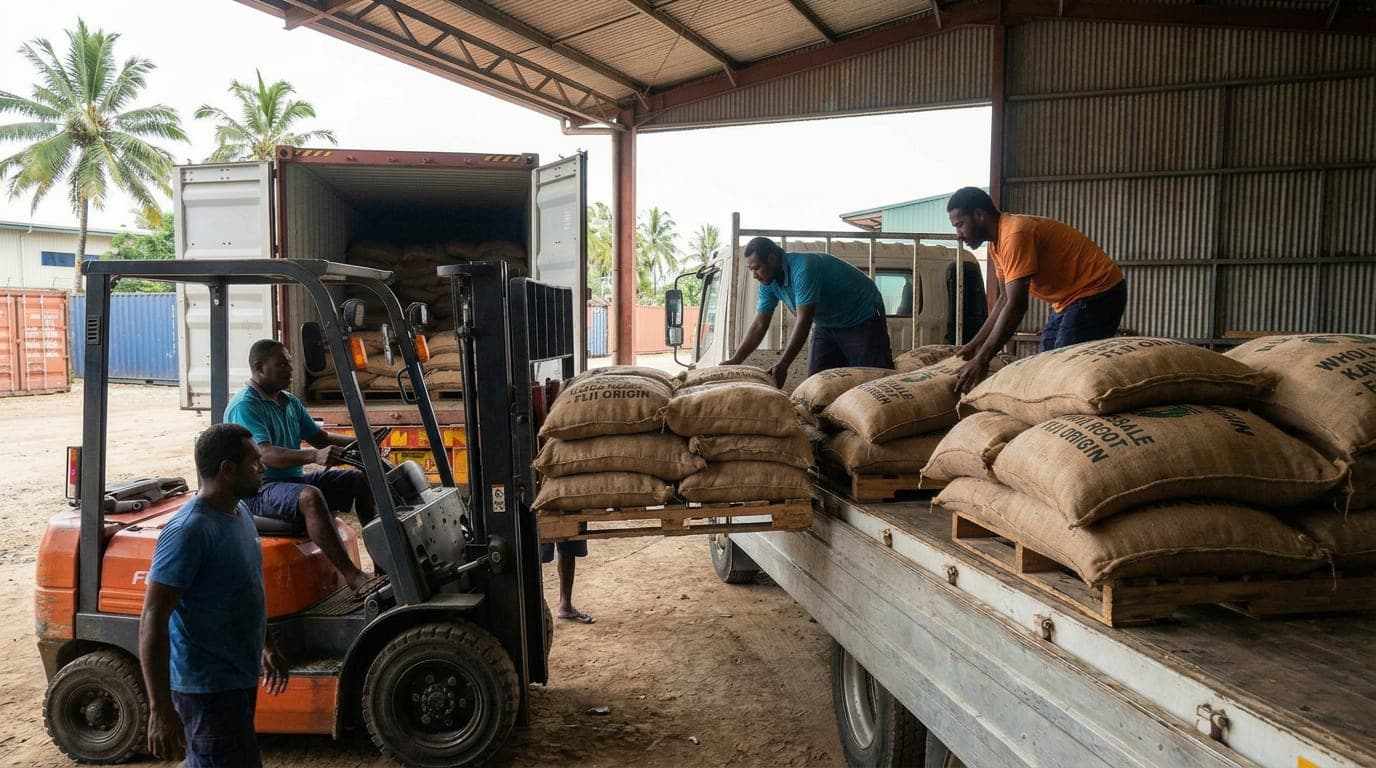
- Direct-sourced or brokered? Understand which model the supplier operates. Direct-sourced suppliers and those with named cooperative or farm-partner networks can typically speak with more granularity to source-chain questions when asked; deeply brokered chains often can't. Neither model is disqualifying on its own — the question is whether the supplier can answer your specific questions about origin, farm partners, and sourcing practices in writing when you ask
- Cultivar profile disclosure. Noble kava has a well-known family of cultivars (Borogu, Melomelo, Waka, Lewena, Loa Waka, Kelai, Palarasul, Bir Kar, and others). Many wholesale kava products are noble-cultivar blends by design — the value is in delivering a consistent noble profile rather than a single-cultivar SKU. A supplier should be able to speak to the cultivars or sourcing regions in the blend when asked. Inability to discuss cultivar profile at all is the red flag; running a disclosed noble blend is standard practice
- Exclusion of tudei / non-noble varieties. Non-noble kava (particularly Isa and Palasa varieties) contains higher levels of flavokavains linked to nausea, prolonged effects, and — historically — the European hepatotoxicity findings that drove regulatory action. Noble-only sourcing is the single most important safety decision in the kava supply chain
Red flags: Marketing copy is the shorthand — every supplier uses phrases like "Pacific Island kava" or "premium noble" in their public messaging, and that's fine. The real red flag is when the supplier can't or won't go beyond the shorthand in a technical conversation: evasive answers about origin countries, unwillingness to speak to noble-vs-tudei practices, or an inability to discuss cultivar profile or source regions when asked in a sales or diligence call.
2. Testing and the Certificate of Analysis
Every wholesale kava batch should have a Certificate of Analysis (CoA) available on request. Some suppliers ship a CoA with every order by default; others issue an internal CoA on every batch and provide it on request. Both models can work as long as the CoA meets the scope requirements below. What the CoA covers is at least as important as who signs it — an internal CoA developed against accredited-lab methodology, backed by independent verification available on request, is a defensible position; a "CoA" that's a marketing sheet with no batch-specific values is not.
What to require on the CoA:
- HPLC kavalactone profiling. Individual percentages of all six kavalactones (kavain, dihydrokavain, methysticin, dihydromethysticin, yangonin, desmethoxyyangonin) — not just a total. This lets buyers verify the chemotype and noble-kava signature
- Total kavalactone content. Should be reported as a weight percentage of the finished material
- Heavy metals. Lead, arsenic, cadmium, and mercury — with actual measured values against acceptable limits (USP <232> or equivalent)
- Residual solvents. Class I, II and III per USP <467> — required for extract-format products (oleoresin, nano-emulsified)
- Microbial screening. Total plate count (TPC), yeast, mould, coliforms, E. coli, and Salmonella
- Pesticide residues. Multi-residue screening panel against relevant national or international limits
- Batch identifier and manufacture date. The CoA should be tied to a specific batch traceable back to source material, not a generic product spec sheet
- Methodology transparency. The CoA should identify the testing lab (whether the supplier’s own or a third-party) and the accreditation framework the methods align to (typically ISO/IEC 17025). If the supplier issues internal CoAs, the internal methodology should be aligned with accredited-lab standards, and independent third-party verification should be available on request against the same batch sample
Red flags: "Standard" CoAs with no batch-specific values; CoAs that quote ranges instead of measured values; CoAs missing pesticide or microbial screening; refusal to share pre-purchase CoAs on samples; internal-only testing with no independent verification pathway available on request.
3. Chemotype Verification and Noble-Kava Signature
Kavalactone dominance patterns — chemotypes — encode noble-kava safety signal in the first two digits of the six-digit code. Noble cultivars generally begin with 42 (kavain-dominant, then dihydrokavain) or 24 (dihydrokavain-dominant, then kavain). Non-noble and tudei cultivars typically show desmethoxyyangonin or yangonin dominance — not what a buyer of noble kava wants to see on a CoA.
What to verify:
- Chemotype disclosure on the CoA or on the batch spec sheet
- Chemotype consistency within an expected range. Some batch-to-batch variation is normal, particularly with cultivar-blended noble material — the chemotype should stay kavain-led (commonly opening 42, 24, or 46 in Fijian waka) and within a supplier's disclosed range. Large or unexplained chemotype shifts, especially away from the noble signature, warrant a follow-up conversation about source-chain changes
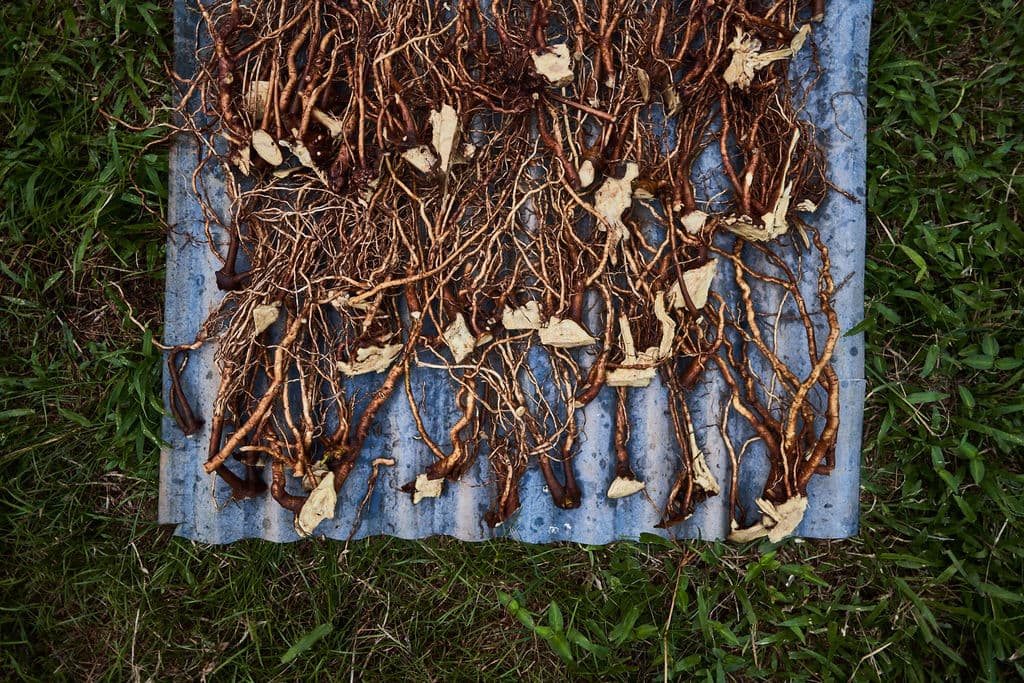
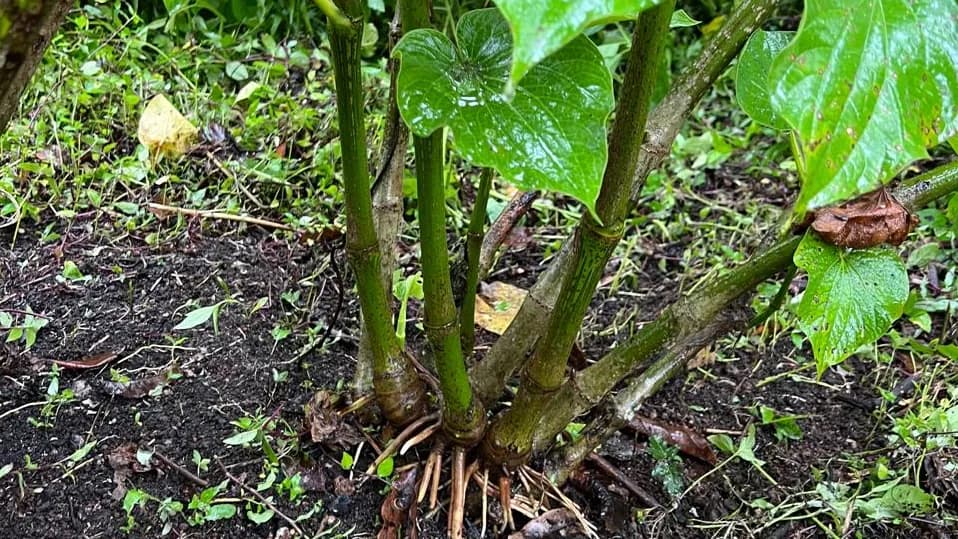
- Plant part disclosure. Kavalactone content varies significantly by plant part — root and lateral roots carry the highest concentrations; stumps and stems less; leaves and aerial parts are prohibited in most regulated markets due to hepatotoxicity signals in early European studies
4. Certifications and Compliance
Certifications aren't a substitute for testing, but they signal that the supplier operates under a documented quality management system.
What to look for:
- ISO 22000:2018 — food safety management
- ISO 9001:2015 — quality management
- HACCP — hazard analysis and critical control points, particularly relevant for microbial risk management
- Kosher and/or Halal — dietary compliance certifications relevant to specific customer markets
- cGMP — current Good Manufacturing Practice, particularly for downstream products (extracts, oleoresins, nano-emulsified formats) manufactured at specialised facilities
Red flags: Claims of certifications without certificate numbers or issuing bodies; expired certificates; certifications on a legal entity that doesn't match the invoicing entity.
5. Regulatory Readiness
Kava's regulatory status varies significantly by market. A supplier serving international buyers should be able to speak fluently about the regulatory landscape in the markets their customers ship to.
What to confirm:
- Australia — kava was re-legalised for commercial import in December 2021, but only in specific formats. RTD kava beverages must be water-based and free of added flavouring. A supplier that doesn't know this can't help buyers ship into Australia
- United States — kava is available as a dietary supplement, but FDA has issued advisories on hepatotoxicity linked to non-noble varieties. Noble-only sourcing is the defensible position
- European Union — a patchwork; some member states still restrict kava, others permit it. Suppliers exporting to the EU should be aware of the specific rules for the destination country
- Country of manufacture requirements for the specific format (bulk root powder vs oleoresin vs downstream extracts) — these differ and require category-specific compliance documentation
6. Operational Fit
Beyond quality and compliance, the supplier has to fit how a buyer actually operates.
- MOQ (minimum order quantity). Common wholesale MOQs are 1 kg for standard SKUs. Lower MOQs suggest a supplier is used to serving small buyers; higher MOQs may signal a wholesale-only operation. Neither is inherently better — match to your volume needs
- Lead time. Standard fulfilment for in-stock SKUs should be 2–3 weeks; longer lead times may indicate the supplier is producing to order (which affects buffer-stock strategy) or has capacity constraints
- Bulk pricing tiers. Tiered discounts starting from 5 kg and scaling with volume are typical. Flat pricing at any volume is unusual and worth questioning
- Sample availability. Reputable suppliers ship pre-purchase samples with the same CoA rigour as production batches. Sample-then-buy is the standard workflow for a new supplier relationship
- White label and private label services. If the buyer's finished product is a branded retail SKU, the supplier's willingness to run private-label packaging and formulation runs matters
- Communication. A supplier that responds to a technical CoA question within 24 hours is a different kind of partner than one that takes a week and provides a marketing brochure
7. Red Flags: When to Walk Away
Some things are single-instance disqualifiers. If any of these come up in early diligence, the supplier is not ready to serve a commercial B2B buyer:
- Refusal to share a pre-purchase sample CoA
- Vague or evasive answers about the sourcing chain when asked in writing — distinct from marketing copy using industry shorthand (which every supplier does). The red flag is inability or unwillingness to answer specific questions about origin country, source regions, cultivar profile, or noble-only sourcing practices in a technical conversation
- Marketing copy that avoids the noble-vs-non-noble distinction
- CoAs quoting "standard" ranges rather than measured batch values
- No third-party laboratory identification
- Pricing that undercuts the market by 30%+ (raw noble kava has a floor cost; material priced significantly below floor is almost certainly non-noble, plant-part mixed, or poorly sourced)
- Absence of any published regulatory or compliance documentation
The Pre-Purchase Checklist
The seven categories above translate into 48 specific things to verify before signing a purchase order with a new wholesale kava supplier. Rather than repeat the full list here, we’ve published it as a standalone printable reference:
→ Kava Supplier Vetting Checklist — a print-ready RFP template covering sourcing, testing, chemotype, certifications, regulatory readiness, operational fit, and red flags. Use one copy per supplier on your shortlist.
Suppliers that clear the checklist are a workable starting point. Suppliers that don’t may still be usable for lower-risk applications, but the buyer takes on any diligence gap themselves.
How Kavain Answers Each of These
Kavain is a B2B wholesale kava manufacturer sourcing noble kava directly from farming communities in Fiji and Vanuatu. All material is chemotype-verified via HPLC before it enters our supply chain. Every batch is issued with an internal Certificate of Analysis covering the full test panel — kavalactone profile, heavy metals, residual solvents, microbial screening, and pesticide residues — available on request. Our internal testing methodology was developed in partnership with our ISO/IEC 17025:2017-accredited US lab partners (Murray-Brown Laboratories, Wonderland Labs, Cora Science), using the same USP-aligned specifications. Independent third-party CoAs against the same batch sample are arranged on request when buyers require an independently-signed CoA. We operate under ISO 22000:2018, ISO 9001:2015, HACCP and Kosher certifications, with downstream nano-emulsified production run at a cGMP-compliant US manufacturing partner. Product-level detail lives on the individual product pages; the quality assurance and sourcing pages cover the systems and origin chain in more depth.
If you'd like to evaluate Kavain against your own supplier checklist, contact us to arrange a sample kit with the CoAs for your target formats.