Products & Formulation
Do You Actually Need 30% Kava Powder?
12 min read
Read
Everything B2B formulators need to know about the most concentrated kava format on the market
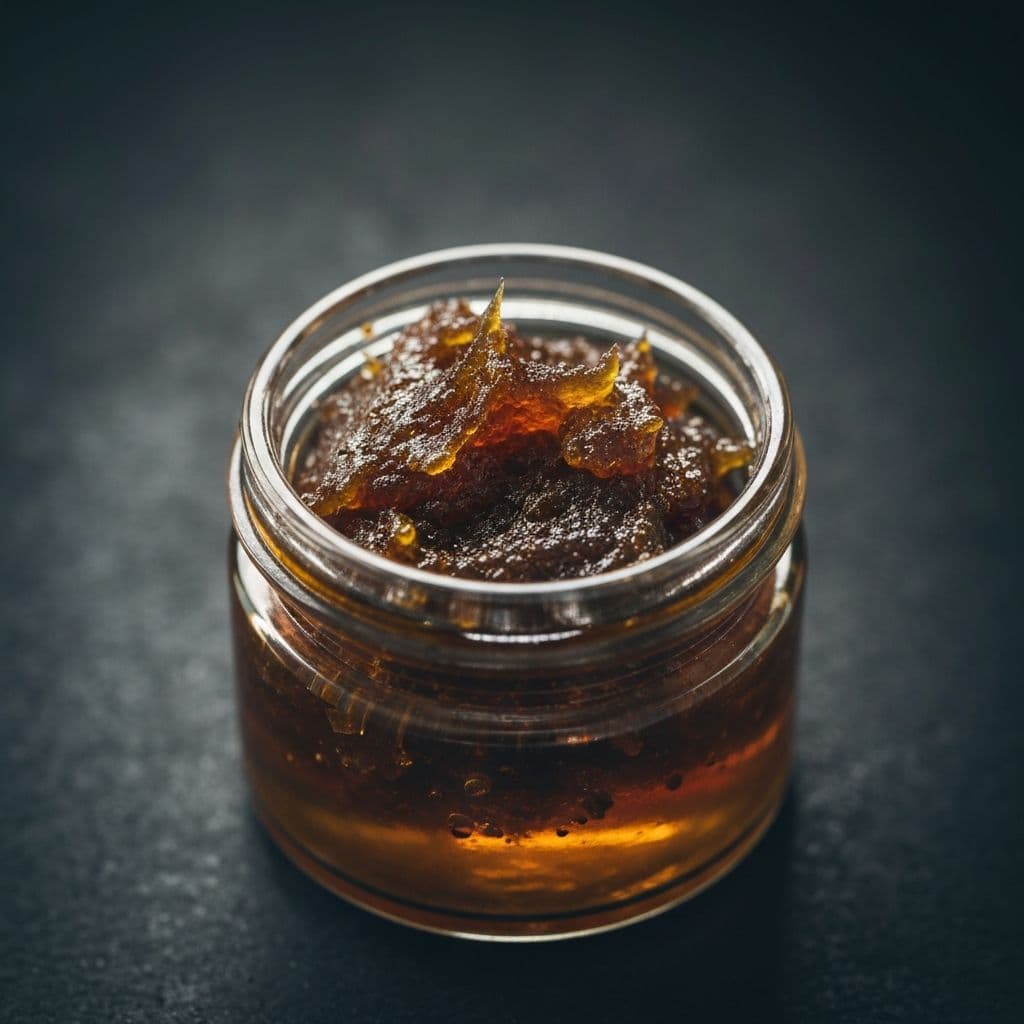
Kava oleoresin is the most concentrated format in the kava industry — a dense, golden paste standardised to 70% or higher kavalactone content, produced by supercritical CO2 extraction of noble kava root. For B2B formulators working on supplements, beverages, edibles, or pharmaceutical-adjacent products, oleoresin is where most modern kava formulations start. This guide covers everything that actually matters: what oleoresin is, how it’s made, what the kavalactone profile looks like, how to formulate with it, and what to look for when evaluating suppliers.
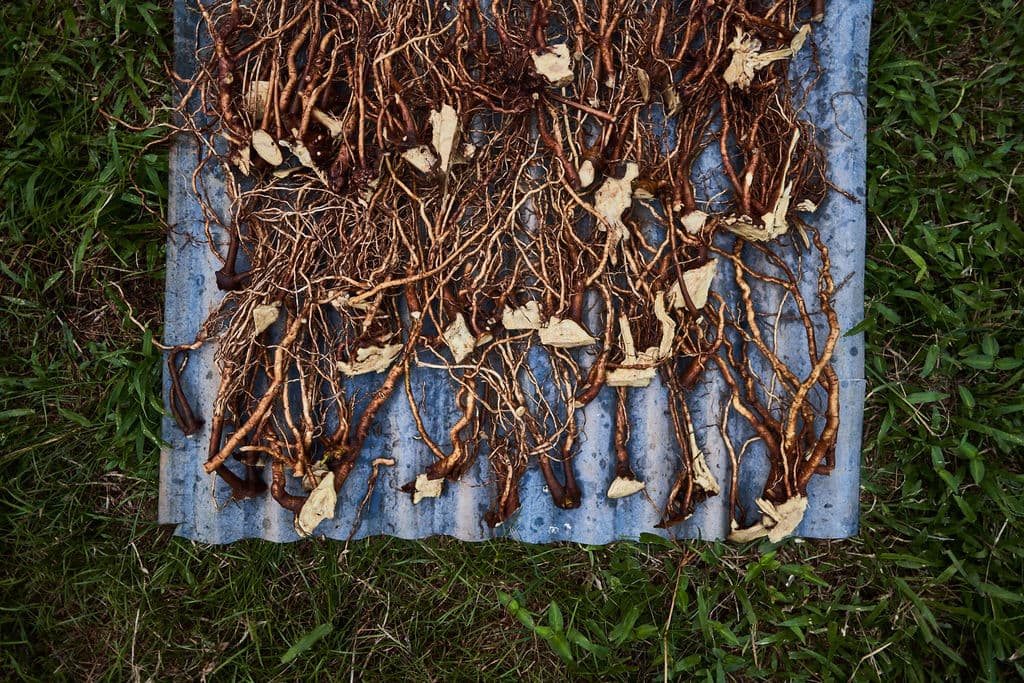
Kava oleoresin is a concentrated paste extracted from the root of the noble kava plant (Piper methysticum), a perennial shrub native to the Pacific Islands. The paste contains the six kavalactones — kavain, dihydrokavain, methysticin, dihydromethysticin, yangonin, and desmethoxyyangonin — responsible for kava’s characteristic relaxing and mildly anxiolytic effects.
Raw kava root delivers around 6–10% kavalactones by weight. Oleoresin concentrates that profile to 70%, 75%, or 80% — an order-of-magnitude increase in potency per gram. The concentration is achieved by separating the kavalactone-rich oil fraction from the non-active components of the root: fibre, starch, water, residual pigments, and the solvent itself.
At Kavain, every batch of kava oleoresin starts with HPLC-verified noble cultivars sourced from our Fiji farm and our Vanuatu partner networks. Chemotype profiling happens before any material enters extraction, alongside the cultivar identity for the lot. Chemotype is a screening indicator rather than proof of nobility, so nobility is confirmed by cultivar identity together with flavokavain analysis.
Supercritical CO2 extraction is one of the most advanced methods available for isolating active compounds from botanical material. It’s the same technique used to decaffeinate coffee, extract hop oils for premium beer, and produce high-end botanical extracts for flavour and fragrance.
The process works because of a specific property of carbon dioxide: when held above its critical pressure (~73.8 bar / 1,070 psi) and critical temperature (~31°C / 88°F), CO2 becomes a “supercritical fluid” — a state that’s neither gas nor liquid but has properties of both. As a supercritical fluid, CO2 flows through dried kava root like a gas while dissolving oil-soluble compounds like a liquid.
The kava extraction process runs through several stages:
Our extraction facilities are powered by Buffalo Extraction Systems — industrial CO2 extraction equipment used across botanical, hemp, and essential oil industries.
Before supercritical CO2 became economically viable for large-scale botanical extraction, most kava extracts were produced using ethanol, acetone, or other organic solvents. That history matters because it shaped current kava regulation globally.
In 2001–2002, Germany and several other European countries banned kava based on a cluster of reported liver injury cases. Subsequent analysis identified two likely contributing factors:
The 2014 Codex Alimentarius decision and subsequent EU re-opening of the kava market reset expectations. Today, the combination of noble-only sourcing and solvent-free extraction is effectively the compliance baseline for international kava supply.
CO2 extraction addresses both concerns directly:
For formulators building products for the US, EU, Japanese, Australian, and other regulated markets, CO2-extracted oleoresin from noble kava is the lowest-friction path to compliance.
Supercritical CO2 extraction preserves the full six-kavalactone spectrum present in the source root. The relative proportions of the six — the chemotype — carry over from the raw material into the finished oleoresin. For a deep explanation of how chemotypes work and how to read a six-digit chemotype code, see our kava chemotype guide.
At Kavain, every oleoresin batch carries forward the noble kava chemotype signature — kavain (K) and dihydrokavain (DHK) dominant, with the remaining four kavalactones in supporting proportions. Exact chemotype ratios vary slightly by batch depending on source cultivar and plant part (waka vs lewena), but the leading-42 or leading-24 pattern is maintained throughout.
What the concentration step does change is potency per gram, not profile. A 70% oleoresin and an 80% oleoresin carry the same chemotype; they just deliver different amounts of kavalactone per gram of material.
Kavain supplies three kava oleoresin grades. The grade you choose is almost always a formulator preference based on fill volume, dose standardisation, and cost-per-kavalactone targets — not a difference in applications. All three grades are suitable for the same product categories.
Full specifications, side-by-side comparison, and live pricing are on our kava oleoresin product page.
Kava oleoresin ends up in a predictable set of finished products. Here’s what formulators are typically building:
Capsules and softgels. The single largest application. Oleoresin lets a supplement brand deliver 50–150 mg of kavalactones per capsule in a standard size 0, size 1, or softgel format. The same dose from raw powder would require 500–2,500 mg of fill — impractical.
Gummies and edibles. Oleoresin integrates into gummy bases and chocolate formulations without the earthy-peppery flavour profile of raw kava. Formulators typically emulsify the paste into the liquid matrix before setting. Inclusion rates are low enough (0.2–0.5% w/w depending on target dose) that taste masking is straightforward.
Kava shots and concentrated beverages. Functional beverage brands use oleoresin to build 50–100 ml shots at 100–300 mg kavalactones. The paste requires an appropriate solubilisation system — medium-chain triglyceride (MCT) oil, an ethanol carrier, or a food-grade emulsifier — but the end result is clean, consistent, and shelf-stable.
Nutraceutical blends. When kava is one of several actives in a capsule (e.g. kava + L-theanine + magnesium + ashwagandha), fill volume becomes a critical constraint. Oleoresin lets kava meet its target dose without crowding out the other ingredients.
Tinctures. Liquid formulations in ethanol or glycerin carriers. Oleoresin is fully soluble in ethanol and can be extended into glycerin-based tinctures with the right ratios.
Pharmaceutical-adjacent formulations. Research applications and pharmaceutical-preparation-style products where per-batch HPLC profiling and standardisation matter more than cost. Typically the 75% or 80% grades.
White-label and private-label products. Oleoresin is the default input for contract manufacturing partners building kava SKUs for multiple brands.
Practical notes that come up regularly in formulator conversations:
Calculating inclusion rate. The maths are straightforward: target kavalactone dose ÷ oleoresin concentration = mg of oleoresin required.
Solubilisation. Oleoresin is fat-soluble, not water-soluble. For beverage applications, pre-dissolve in MCT oil, ethanol, or a food-grade emulsifier before adding to the water phase. Common ratios: 1:3 to 1:5 oleoresin:MCT for a stable pre-mix that can be emulsified into finished drinks.
Handling and temperature. At room temperature, oleoresin is a viscous paste — thicker in cooler conditions, more fluid when warm. Production facilities typically warm the paste slightly (30–40°C) for easier handling and accurate dosing into encapsulation lines or beverage bases. Avoid prolonged exposure above 60°C, which can affect kavalactone stability over time.
Dosing reference. Traditional kava drinks deliver roughly 100–250 mg of kavalactones per serving. Commercial kava supplements typically range from 50–150 mg per dose. Concentrated shots range from 100–300 mg.
Flavour. Oleoresin is relatively neutral compared to raw powder — no gritty texture, no strong earthy note, and only a slight amber tint at higher inclusion rates. Most finished products mask the mild residual flavour easily.
For a detailed comparison of oleoresin vs powder across these formulation dimensions, see our oleoresin vs powder guide.
Every batch of Kavain oleoresin — regardless of grade — runs through the same QA pipeline:
HPLC kavalactone profiling. High-Performance Liquid Chromatography identifies and quantifies all six kavalactones individually. This produces both the total kavalactone percentage (confirming 70%, 75%, or 80% standardisation) and the six-digit chemotype code (confirming noble kava).
Heavy metal screening. Lead, arsenic, cadmium, and mercury — tested to international supplement and food-safety limits.
Microbial testing. Total plate count, yeast, mould, coliforms, E. coli, and Salmonella screening.
Pesticide residue analysis. Screening against globally applicable pesticide residue panels.
An internal Certificate of Analysis detailing all of the above is issued on every batch, available on request. Kavain’s internal testing methodology was developed in partnership with our ISO/IEC 17025:2017-accredited US lab partners (Murray-Brown Laboratories, Wonderland Labs, Cora Science) using USP-aligned specifications, so the internal CoA covers the same scope and methods as an independent one. Independent third-party CoAs against the same batch sample are arranged on request when buyers require an independently-signed CoA. Kavain’s processing facilities hold ISO 22000:2018 (Food Safety Management), ISO 9001:2015 (Quality Management), HACCP, and Kosher certifications.
For the full quality assurance process, see our quality page.
When evaluating kava oleoresin suppliers, the things that actually matter:
For more on how to evaluate suppliers for noble kava specifically, see our noble vs non-noble guide.
Kava oleoresin is the format that modern kava formulation has converged on. The combination of high potency per gram, standardised kavalactone content, solvent-free CO2 extraction, and compatibility with compliance-regulated markets makes it the default starting point for capsules, gummies, shots, and most supplement applications.
The underlying material — noble kava root from the Pacific Islands — remains the same plant people have been preparing traditionally for centuries. What changed is the processing: supercritical CO2 extraction lets modern formulators meet the dosing, standardisation, and regulatory requirements of global supplement markets while preserving the full six-kavalactone profile that makes kava worth formulating with in the first place.
Kavain produces noble kava oleoresin at 70%, 75%, and 80% kavalactones via supercritical CO2 extraction within our vertically integrated supply chain. Every batch is HPLC-verified for chemotype and kavalactone content and issued with an internal Certificate of Analysis; independent third-party CoAs are arranged on request. Explore our kava oleoresin products →
Sources and further reading:
Continue exploring kava industry insights
Experience the Kavain difference. Request a sample today and discover why leading formulators trust us for their kava supply.