Sourcing
Fiji vs. Vanuatu Kava: A Buyer’s Comparison
9 min read
Read
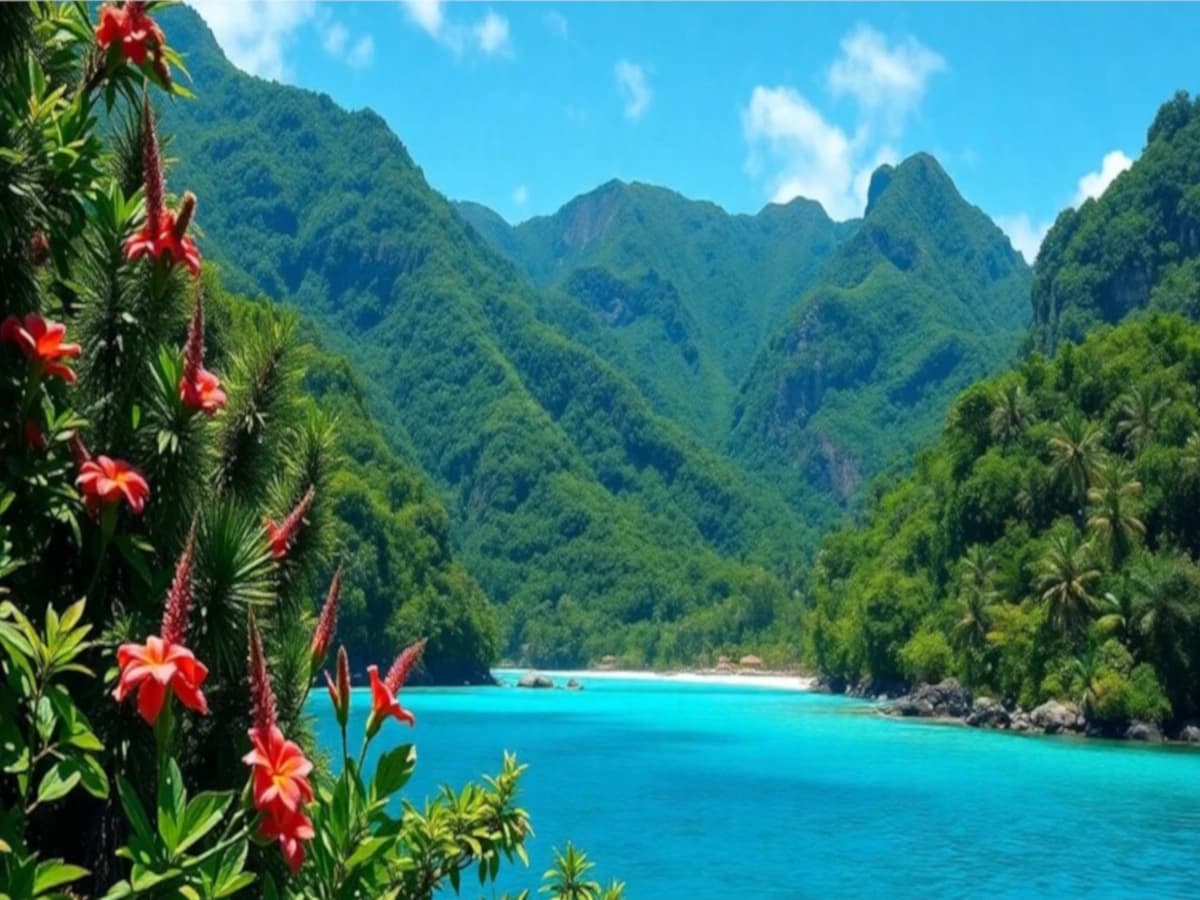
The remarkable story of one of history’s most extraordinary feats of traditional agriculture
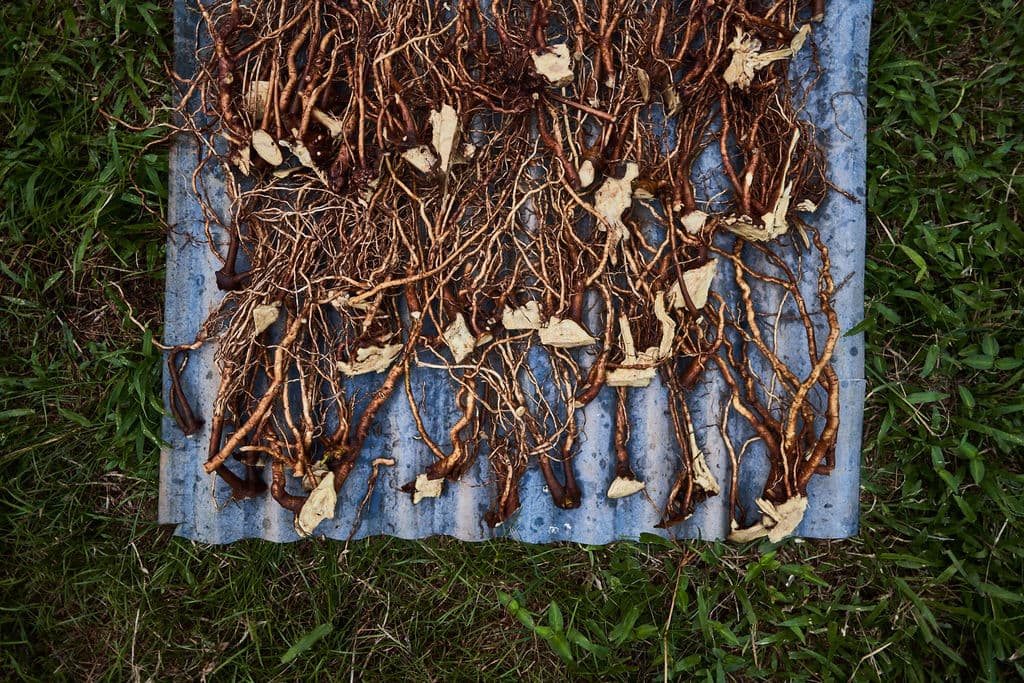
Every noble kava cultivar you’ve ever consumed — every shell of Borogu, every batch of Vula Kasa Leka, every gram of standardized extract — traces its lineage back to a wild plant that Pacific Island farmers painstakingly selected, cloned, and refined over centuries. The story of how kava was domesticated is one of the most remarkable feats of traditional agriculture in human history, and it’s a story that virtually no one in the modern kava industry is telling.
Here’s the fact that makes kava’s story extraordinary: Piper methysticum — the species name for cultivated kava — is completely sterile. It does not produce viable seeds. Female plants are rare, and even when hand-pollinated in controlled settings, the flowers fall off before they can fruit.
This means that every kava plant in every farm, every garden, and every wild planting across the entire Pacific was propagated by human hands. Every single one is a clone, grown from a cutting taken from another plant. There is no natural seed dispersal, no wind pollination creating new varieties, no birds spreading kava to new islands. If kava exists on an island, it’s because someone deliberately carried a cutting there and planted it.
This also means that if people stop cultivating kava, it disappears. Historical records confirm this has happened: kava was once found across much of Polynesia but died out in the Society Islands, the Marquesas, the Cook Islands, Niue, and Hawaii after colonial-era disruptions — particularly the influence of Christian missionaries who discouraged its use, and damage from introduced pigs and weeds.
The question this raises is simple but profound: if kava can’t reproduce on its own, where did it come from?
In the late 1980s, researchers Vincent Lebot and Jacques Lévesque set out to answer this question through the most comprehensive survey of kava genetics ever conducted. They collected cultivars from 42 different islands across the Pacific, planted them in germplasm collections, and analyzed over 200 root samples using HPLC (High Performance Liquid Chromatography) to identify their chemical profiles.
Their findings pointed to a single wild species: Piper wichmannii. This is a closely related plant found in Papua New Guinea, the Solomon Islands, and the northern islands of Vanuatu. Unlike cultivated kava, P. wichmannii does produce seeds in its wild range and can reproduce sexually. The two species are so similar that even experienced botanists sometimes confuse them, and local farmers in Vanuatu have long considered them to be variants of the same plant.
The critical evidence came from chemistry. Lebot and Lévesque demonstrated that both P. wichmannii and P. methysticum are the only species in the entire Piper genus that produce kavalactones. No other pepper species anywhere in the world contains these compounds. Furthermore, by analyzing the chemotype patterns of wild P. wichmannii populations and comparing them to cultivated P. methysticum varieties, they were able to trace a plausible lineage of chemotypes from the wild ancestor to the modern cultivars.
The domestication of kava appears to have followed a process of deliberate clone selection by traditional farmers over many generations. Here’s how researchers believe it worked:
Wild Piper wichmannii reproduces sexually, and because it’s dioecious (with male and female flowers on separate plants), cross-pollination between different individuals produces highly variable offspring. Each seedling in a wild population can express a different combination of kavalactone concentrations and proportions — a different chemotype.
Traditional farmers, through centuries of experimentation and observation, identified individual wild plants that produced desirable effects: pleasant relaxation, sociability, clear-headedness, and manageable potency. When they found such a plant, they propagated it vegetatively — taking cuttings and growing clones that preserved the exact chemical profile of the parent.
This is precisely the same principle behind modern clonal selection in agriculture, but Pacific Island farmers were practicing it centuries before Western science formalized the concept. By selecting for desirable chemotypes and propagating them as clones, they gradually developed a collection of cultivars that were chemically distinct from the wild population. Over time, these selected clones became so differentiated that botanists classified them as a separate species: Piper methysticum.
The sterility of P. methysticum may itself be a consequence of this process. Chromosome analysis has revealed that cultivated kava is a decaploid — it has ten sets of chromosomes (2n = 130), based on a base number of 13. This is the highest level of ploidy ever recorded in the Piper genus and likely contributes to the plant’s inability to reproduce sexually. Whether the polyploidy arose through hybridization events, somatic mutation, or some combination is still debated, but the result was a plant that could only survive through human cultivation.
The evidence strongly points to Vanuatu — specifically its northern islands — as the primary center of kava domestication. Several lines of evidence converge:
Genetic diversity. Vanuatu has more named kava varieties than any other country — over 80, compared to 13 in Fiji, 10 in Samoa, 7 in Tonga, and 2 in Pohnpei. This is exactly what you’d expect from a center of origin, where the longest history of selection has produced the greatest diversification.
Presence of the wild ancestor. Piper wichmannii grows wild in Papua New Guinea, the Solomon Islands, and northern Vanuatu. In Vanuatu, local oral traditions specifically describe the ancestral relationship between the wild species and cultivated kava. On the island of Pentecost, roots of both species are still mixed together when there isn’t enough of the preferred cultivars for a feast.
Cultural depth. Of all Pacific countries where kava is cultivated, Vanuatu has preserved the richest and most continuous tradition of kava culture. Colonial-era attempts to suppress kava drinking — particularly by Presbyterian and Seventh Day Adventist missionaries — met with limited success in most parts of the archipelago. Today, kava is cultivated on every inhabited island.
Chemotype lineage. The range of chemotypes found in Vanuatu spans from profiles closely resembling wild P. wichmannii to the highly refined noble cultivar profiles. This spectrum is consistent with an ongoing process of selection and diversification originating in these islands.
From Vanuatu, kava was carried by Pacific voyagers to other island groups — east to Fiji, Tonga, and Samoa, and beyond to Polynesia. The plant was almost certainly among the very first crops that migrating peoples would have taken with them, given its central role in ceremony, social life, and conflict resolution. The distribution of kava across the Pacific thus serves as a map of human migration routes — an idea first proposed by early botanists and confirmed by Lebot and Lévesque’s chemical analysis.
Understanding this history reframes what “noble kava” actually means. Noble varieties aren’t simply a regulatory classification or marketing label. They represent the culmination of centuries of careful human selection — cultivars that traditional farmers chose, refined, and preserved because they produced the most desirable combination of effects: relaxation without excessive sedation, sociability without impairment, and consistent potency without unpleasant side effects.
The chemical signature of noble kava — kavain-led profiles, most often opening 42 or 24, and in Fijian waka frequently 46 — is the direct result of this selection process. Farmers chose plants where kavain dominated because those plants produced the best drinking experience. Non-noble varieties, where dihydromethysticin (5) and other kavalactones dominate, were identified through the same traditional knowledge as producing nausea, excessive sedation, and effects lasting uncomfortably long. The classification system encoded in Vanuatu’s Kava Act is, in essence, a legal codification of centuries of traditional pharmacological knowledge.
For anyone involved in the kava trade, this history carries practical implications.
Genetic resources are finite and irreplaceable. Because kava cannot regenerate from seed, every cultivar that falls out of cultivation is permanently lost. The historical extinction of kava from multiple Polynesian island groups demonstrates how quickly this can happen. Supporting the farmers who maintain cultivar diversity — particularly in Vanuatu — isn’t just good ethics. It’s essential for the long-term viability of the industry.
Traditional knowledge has scientific validity. The noble/non-noble classification wasn’t arbitrary. It was developed through empirical observation over centuries, and modern HPLC analysis has confirmed its chemical basis. When Pacific Island farmers say a variety is noble, their assessment aligns with laboratory data. This should inform how buyers and regulators evaluate kava quality.
Origin matters. The genetic and cultural heritage behind each cultivar is inseparable from its quality. A Borogu from Pentecost Island carries the accumulated refinement of generations of ni-Vanuatu farmers who selected and maintained that specific chemotype. This isn’t marketing — it’s agricultural history, and it’s the foundation on which the entire modern kava industry stands.
Kavain works directly with farming communities in Fiji and Vanuatu, sourcing 22 noble cultivars that represent centuries of traditional selection. Our cultivar library documents the origin, chemotype, and characteristics of each variety we supply. Explore our cultivars →
Sources:
Continue exploring kava industry insights
Experience the Kavain difference. Request a sample today and discover why leading formulators trust us for their kava supply.